

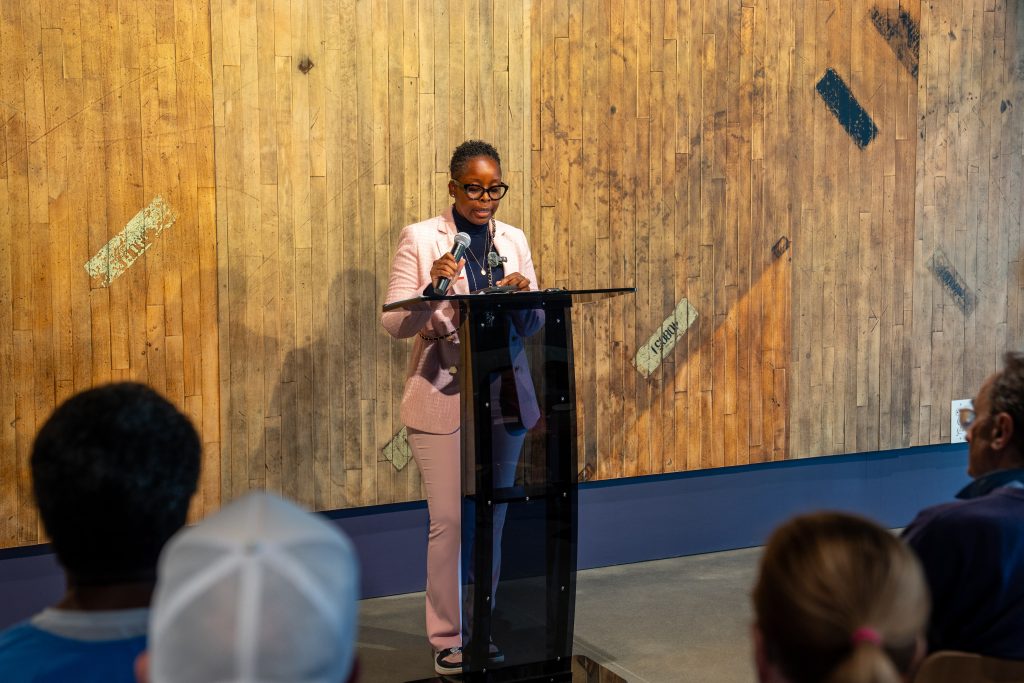
In mid-April, CDCR announced the opening of a state-of-the-art Media Center at the San Quentin Rehabilitation Center (SQRC).
Joined by staff, program supporters, volunteers and the incarcerated population, CDCR showcased innovative programs teaching vital skills in podcasting, video production and print media.
Following the opening of the San Quentin Learning Center in February, CDCR launched the official hub of multimedia training and news – known as the Media Center.
Housed within the multi-level Learning Center, the Media Center will serve media-focused programming at:
- Central California Women’s Facility in Chowchilla
- California Institution for Women in Corona
- Mule Creek State Prison in Ione
- California Correctional Institution at Tehachapi
- California State Prison, Solano, in Vacaville.
The Learning Center is San Quentin’s centerpiece project as the institution moves to transform into a rehabilitation center, allowing for the expansion of award-winning programs and the ability for more incarcerated participants to obtain employable skills as they prepare for re-entry. The Learning Center is designed to improve the lives of and working conditions for employees and incarcerated people, supporting the creation of a more effective justice system that builds safer communities.
What’s in the Media Center
The Media Center houses “Uncuffed,” the first radio podcast operated by incarcerated people in California. Residents work toward a certificate in video and audio engineering weekly classes taught by professional journalists. Participants learn audio storytelling and use donated state-of-the-art audio equipment, software and computers. The program has been replicated at California State Prison, Solano, and California Institution for Women in Corona.
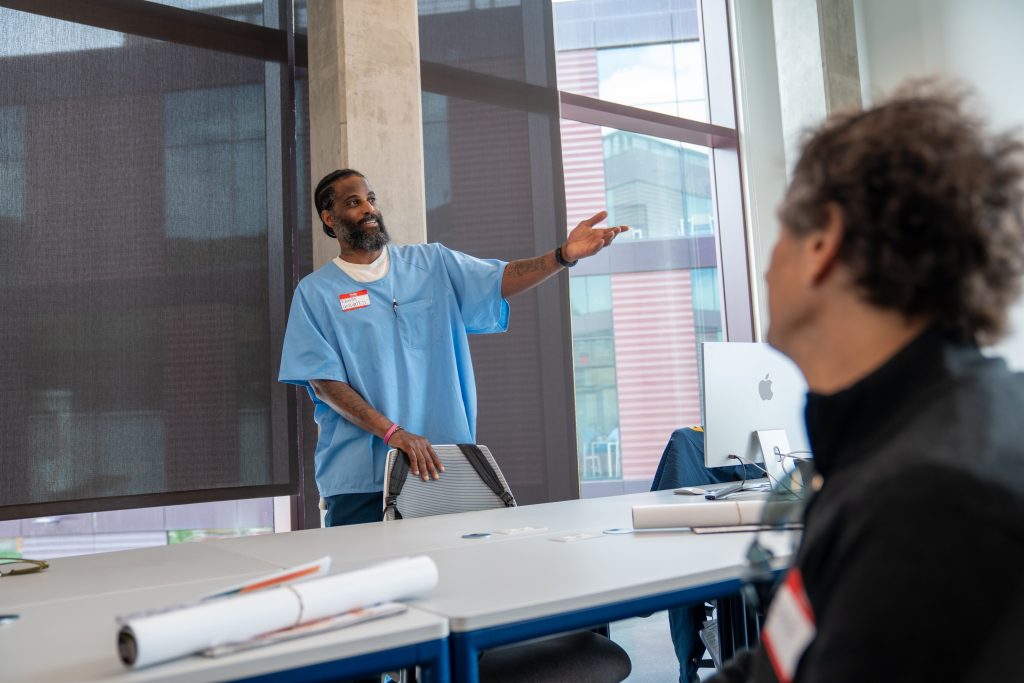

The second floor features a television studio for music and video production. Participants will record and replicate lesson-based self-help group programming to distribute through the Division of Rehabilitative Programs (DRP). These productions will increase the rehabilitative programming available to incarcerated individuals statewide. Additionally, participants look forward to producing community service content for youth diversion programs, gang awareness, suicide awareness, peer-to-peer mentorship, substance abuse, and violence prevention. Content created in the television studio will be available in both English and Spanish, bridging language barriers and becoming more accessible to viewers.
The third floor hosts San Quentin News, a newspaper produced by the institution’s journalism staff. Pollen Initiative, formed to build leadership, audiovisual and journalism skills in correctional systems, works closely with CDCR staff and members of San Quentin News to create national standards. Computer equipment, software, audio and visual equipment was donated to make this center possible.
Learn more on the CDCR News Releases site.
Watch the video:
Video by Richard Tan, Director, TV Communications Center
Office of Public and Employee Communications
Follow CDCR on YouTube, Facebook, X (formerly Twitter). Listen to the CDCR Unlocked podcast.
